Free Mac Softwares Download
VirtualBox 7.2.8.173730
VirtualBox 7.2.8.173730 for macOS is a full-featured, standalone, offline installer available for free download on IGetintomac.
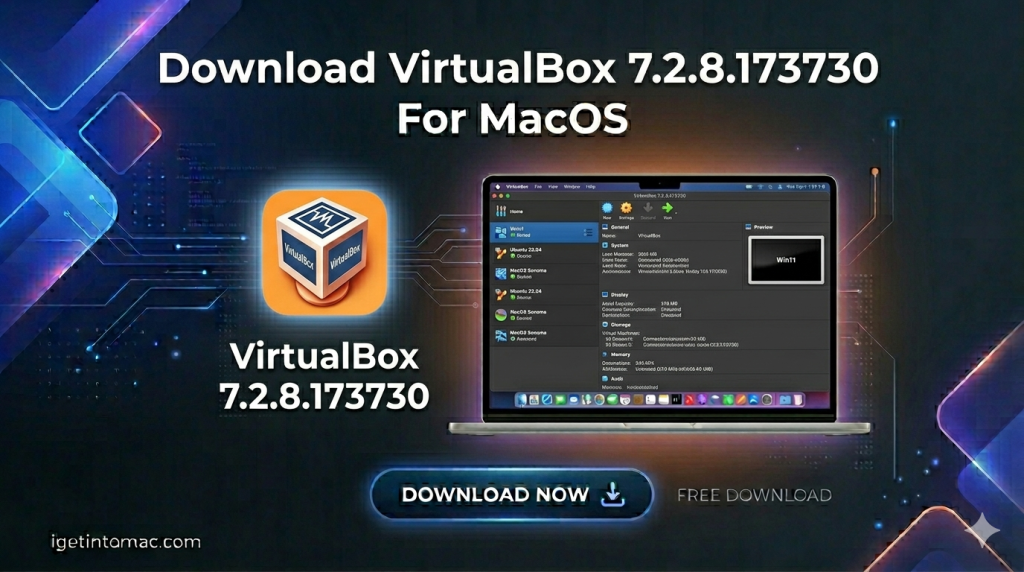
VirtualBox 7.2.8.173730 for macOS Overview:
VirtualBox 7.2.8.173730 for macOS is quietly a brave release during a time when hypervisors were becoming paid, and everything was going to the cloud. It provides a free, effective virtualization layer that works well on both Intel and Apple Silicon Macs, though it has some very important drawbacks. Among other things, this release presents a new macOS native UI that completely rejects the old Qt look and presents a very fresh and cleaner system-themed window. Besides this, it packs macOS Sequoia host and guest experimental capabilities via a patched kernel extension, allowing workarounds for Apple’s ever-tightening security regulations. The biggest draw is better ARM64 emulation on M-series Macs, allowing users to run x86_64 Windows 11 and Linux guests with quite good performance due to a totally rewritten binary translation engine (still slower than UTM or Parallels, but very much better than version 7.0). Build 173730 also brings in seamless host-to-guest drag-and-drop on Apple Silicon, a USB 3.0 controller that really acknowledges device ejection, and a CLI tool that can do a VM snapshot of the running state without the pause. VirtualBox 7.2.8 for developers, educators, and hobbyists who don’t want to pay for virtualization but still need to do cross-platform software testing on a limited budget remains the Swiss Army knife opening most locks, though now and then it might need a little shake. You can also download UEFITool A74.
VirtualBox 7.2.8.173730 for macOS Features:
- Redesigned macOS Native UI (Qt Replacement).
- Experimental macOS Sequoia Host & Guest Support.
- ARM64 Binary Translation for x86_64 Guests (Apple Silicon).
- Seamless Host-to-Guest Drag-and-Drop (Apple Silicon).
- USB 3.0 Controller with Proper Device Ejection.
- Live Snapshot Creation (No VM Pause Required).
- Improved NVMe Virtual Storage Performance.
- Intel Mac VT-x & Apple Silicon Hypervisor Framework support.
- Headless VM Operation via VBoxManage CLI.
- Cloud VM Integration (Oracle Cloud, AWS, Azure).
Technical Details:
- File Name: VirtualBox 7.2.8.173730 macOS
- Version: 7.2.8.173730.
- Release Date: April 21, 2026.
- Created By: Oracle.
System Requirements:
- macOS 10.15 Catalina or later.
- Apple Silicon or Intel Core processor.
FAQs:
Conclusion:
VirtualBox 7.2.8.173730 for macOS highlights the lasting merit of free, open-source virtualization even as Apple’s move to ARM chips adds to the complexity of the x86_64 virtualization landscape. Although it is not able to beat the speed of Parallels Desktop or the flawless integration of UTM on Apple Silicon, it still provides a no-cost option for developers and students who are required to test legacy Intel binaries or run lightweight Linux distributions on recent Macs. The revamped native UI and strengthened ARM64 emulation are clear indicators that Oracle is still committed to the macOS platform despite technical challenges. Nevertheless, if it is smooth Windows 11 gaming or heavy x86_64 software on an M-series Mac that you desire, you should consider other options. For the rest of us, especially those with Intel Macs or using ARM-native Linux VMs, VirtualBox 7.2.8 is still a trustworthy, capable, and refreshingly free machine that gets the job done. Simply set your expectations realistically, and it is always wise to have a snapshot ready.
Leave a Reply